01 · Biology
The Hidden Science
Understand what is known—and what remains uncertain—about GLP-1 medications, appetite, eating behavior, and reward-related systems.
You thought you were losing a relationship. Now you're trying to understand what happened.
The GLP-1 Heartbreak explores the biology, psychology, and social dynamics that can surround dramatic personal transformation—and, more importantly, what you can do with the pain when the person you loved chooses a different path.
You may be trying to understand something much bigger.
A major transformation can intersect with biology, identity, confidence, social attention, friendships, expectations, and life experience.
Understand what is known—and what remains uncertain—about GLP-1 medications, appetite, eating behavior, and reward-related systems.
Explore what can happen when a changing body, confidence, identity, and social experience collide during a period of rapid change.
Separate what you could have done differently from what was never yours to control—and begin rebuilding from reality.
This book does not claim that GLP-1 medication automatically causes relationship problems, personality changes, or breakups.
There is a difference between taking responsibility for your mistakes and taking responsibility for someone else's transformation.
You cannot control her choices, whether she changes, regrets leaving, or comes back. But you can control what happens next in your life.
The goal isn't to become the man she regrets losing.
The goal is to become the man you respect when nobody is watching.
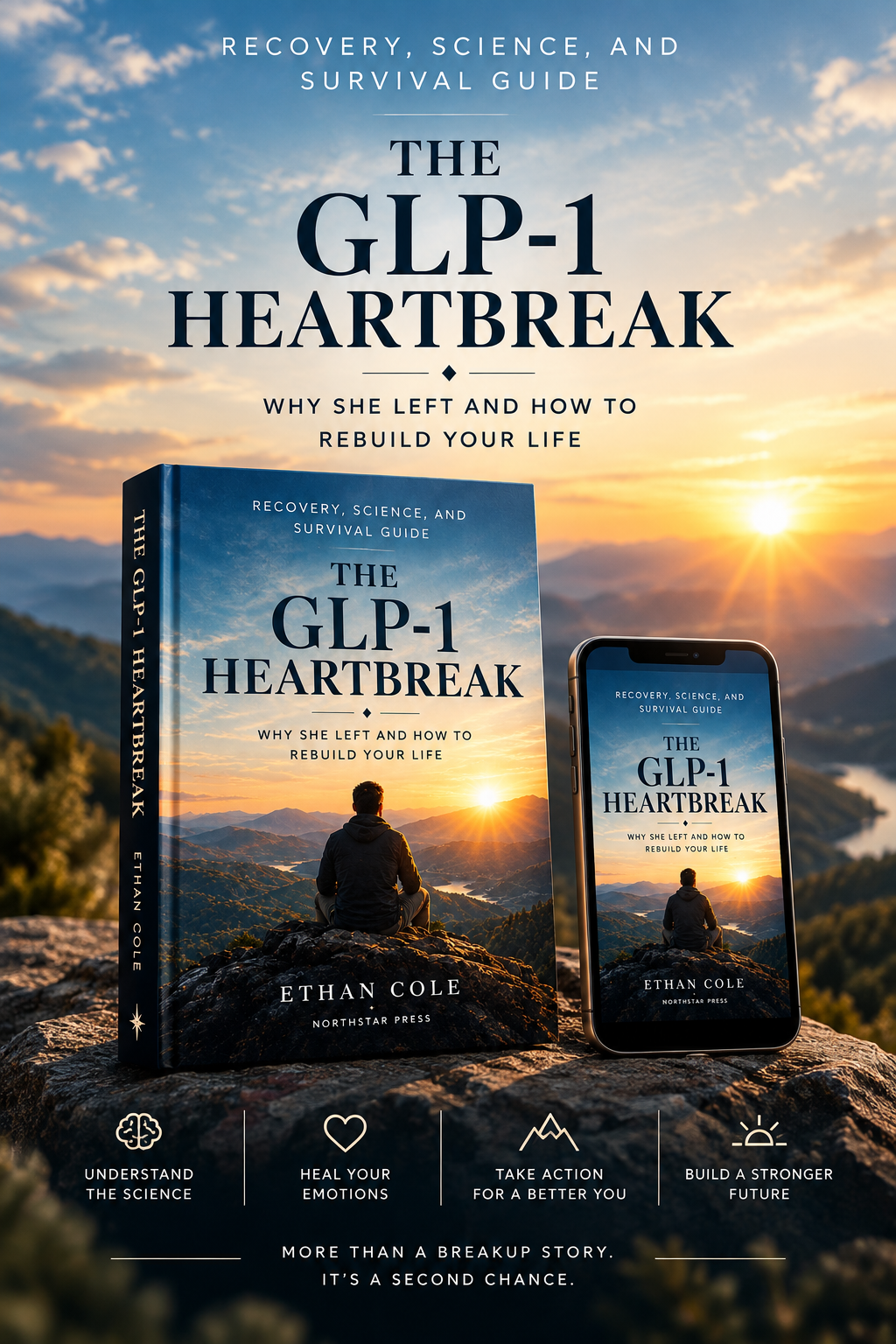
Build a grounded framework for the biological, psychological, and social factors that may have shaped what happened.
Examine your own choices without turning self-reflection into endless self-blame.
Turn heartbreak into practical action across your physical, professional, mental, social, and personal life.
“The goal isn't to become the man she regrets losing. The goal is to become the man you respect when nobody is watching.”
The GLP-1 Heartbreak · Ethan ColeThe book is designed to move you from understanding to action.
You may have started this book wanting answers. You may finish it wanting more from your life.
You don't want simplistic blame. You want a framework that acknowledges uncertainty while taking your experience seriously.
You are ready to stop measuring your worth by whether someone chose to stay.
You want this chapter to become a turning point—not the definition of your life.
The book is a starting point, not a promise that everything ends on the final page.
Once you understand the pattern and begin taking action, there is room to go deeper: structured reflection, planning, habits, purpose, and a longer-term transformation journey.
No. The book explicitly does not make that claim. It explores biological, psychological, and social factors that may intersect with major personal transformation.
No. Research into broader behavioral and relationship effects is still developing. The book distinguishes established findings from interpretation and possibility.
The book speaks primarily to men who have experienced this particular kind of heartbreak, but many of its recovery and personal-development principles are broader.
Wanting someone back does not prevent you from rebuilding yourself. The focus is on what remains within your control.
Self-reflection can be useful. Endless self-blame is not. The book helps you separate responsibility from what you could never control.
No. This is an educational and personal-development guide. It is not a substitute for qualified medical, mental-health, or legal advice.
Maybe the answer isn't behind you. Maybe it's waiting for you to build it.
Get the BookEducational and personal-development content only. Not medical or mental-health treatment.